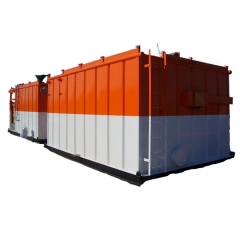
A mud tank, also known as a mud pit, is a large steel container used on drilling rigs for the storage, mixing and processing of drilling fluid, or "mud". It is a critical component of the solids control system, helping to manage drilling fluid properties and remove solid particles.
Types and functions On a drilling rig, several mud tanks work together in a circulating system. They are often divided into compartments, each serving a distinct purpose. Active mud tanks These are part of the active circulation system, where mud is pumped from the tank, down the drill string, and then back up to the surface after carrying rock cuttings out of the wellbore.
Active tank (or suction tank): The drilling fluid is picked up by the mud pumps from this tank and sent down the well.
Processing tanks: The returned fluid is sent through compartments containing solids control equipment like degassers, desanders, and desilters to separate unwanted solids and gases.
Reserve mud tanks
These are used for storing prepared drilling fluid and other fluids that may be needed for future drilling stages or emergencies.
Storage tanks: Hold excess drilling fluid to ensure a continuous supply during long operations.
Mixing tanks: Used for blending new batches of drilling fluid with various additives to adjust properties like viscosity and density.
Specialized tanks
Other smaller tanks may also be used for specific tasks.
Trip tank: A tall, narrow tank used for accurately monitoring the fluid volume needed to fill the wellbore as the drill pipe is pulled out or run into the hole.
Slug tank (or pill tank): A smaller tank for preparing and holding "slugs" of high-density mud or chemical "pills" used to address specific downhole issues.
Components Mud tanks are typically constructed from welded steel plates, often with a V-shaped or cone-shaped bottom to facilitate drainage. Key components include:
Agitators: These stir the fluid inside the tank to prevent solids from settling.
Mud guns: High-pressure nozzles that spray fluid to agitate hard-to-reach areas of the tank.
Walkways and handrails: Allow personnel to safely access the equipment on top of the tank.
Piping: Connects the various tanks and equipment, including the suction line to the mud pumps and the lines for mixing and cleaning.
Solids control equipment: While often considered part of a larger system, the mud tank provides the base for equipment like shale shakers, desanders, and centrifuges.
How mud tanks aid the drilling process
The mud tank system ensures the drilling mud remains in optimal condition for its multiple functions.
Cooling and lubrication: The drilling mud cools and lubricates the drill bit and string, reducing friction and extending equipment lifespan.
Wellbore stability: By precisely controlling mud properties like density and viscosity, the mud tank system helps maintain the pressure needed to keep the wellbore stable and prevent blowouts.
Cuttings removal: As the mud circulates, it carries rock cuttings and debris from the wellbore to the surface, where the tank's integrated equipment can remove them.
Environmental protection: Modern mud tanks are designed to prevent spills and facilitate the proper disposal of used drilling fluids, which helps protect the environment.





 +86 1871 286 0976

 sales@jxsolidscontrol.com