
English

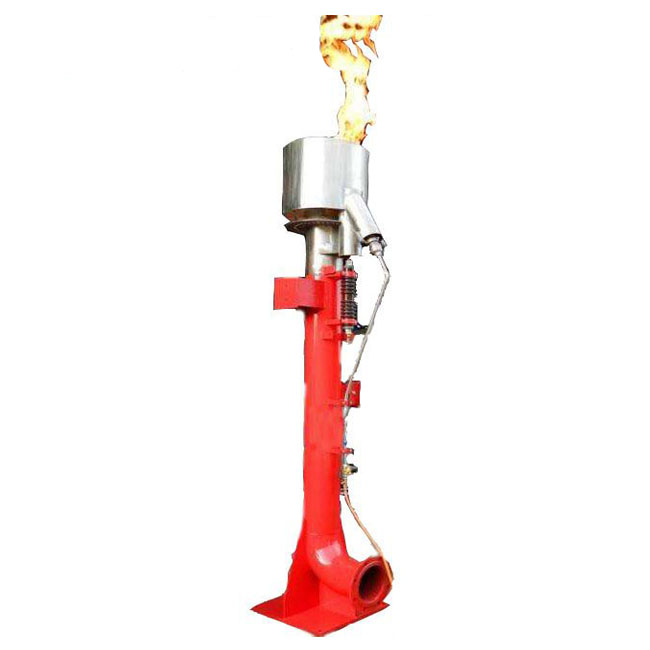
Solar Energy Flare Ignition Device to Burn H2S from Drilling Fluid

Item No.: Flare ignition
Min.Order Quantity:
1 set Supply Ability:
2 sets per week
Port:
Tianjin Xingang
Payment Terms:
L/C,D/A,D/P,T/T,Western Union,MoneyGram
Description

A flare ignition device, or flare ignitor, is a safety system used in oil drilling fluid solids control to burn off H2S etc. flammable gas. By safely combusting waste gas, ignitors prevent the buildup of hazardous gases, minimize environmental impact, and reduce the risk of explosions and fires. 

How a flare ignition device works
A flare ignition device works in tandem with a flare stack, the vertical pipe that channels waste gases upward. The overall process is automatically monitored and controlled for optimal safety. 

  1. Detect gas flow: Sensors monitor the flare stack for waste gas released from pressure relief valves or other process equipment.
  2. Activate ignition system: The ignition device, which is located at a safe distance from the stack, sends an ignition source to the flare tip when gas is detected.
  3. Ignite flare: The ignition source, such as a spark or a pilot flame, ignites the waste gas as it exits the flare tip.
  4. Monitor combustion: The system continuously monitors the flame to ensure stability and automatically re-ignites it if necessary.
  5. Control and shutdown: The device stops the ignition process when the gas flow ceases. Modern systems often include automated and remote control capabilities. 
Common types of flare ignition devices
Various types of flare ignition devices are available, chosen based on application, reliability needs, and environmental conditions. 
  • Electronic ignition: These systems use high-energy electric sparks to ignite a pilot flame at the flare tip. They are automated, reliable in harsh weather, and a popular choice for new installations due to their simplicity and low maintenance.
  • Flame front generator (FFG): An FFG uses a spark to ignite a combustible air-fuel mixture in a control panel at ground level. The resulting flame "front" then travels through a pipe to ignite the pilot burner at the flare tip. This system is known for its reliability and is suitable for remote locations.
  • Ballistic pellet ignition: Primarily used offshore, this method launches a pyrotechnic pellet up a guide tube to the flare tip using compressed air. The pellet bursts into a shower of sparks upon reaching the flare, igniting the gas.
  • Pilot ignition systems: These use a continuous pilot flame to ignite the main flare. The pilot flame is typically ignited electronically or with an FFG. 

Flare ignition devices are essential safety equipment used across several heavy industries. 
  • Oil and gas production: Flares dispose of excess hydrocarbons released during drilling and other operations.
  • Refineries and chemical plants: They protect plant equipment from dangerous pressure buildups and dispose of flammable waste gases.
  • Landfills and wastewater treatment: Flares burn off combustible biogas, like methane, that is generated from waste.
  • Offshore platforms: Rugged and reliable systems are crucial for igniting flares in remote, harsh marine environments. 

Parameters
 

Model

YPD-20/3

Torch diameter                          

DN200mm

Igniter height

3m / 4m                                       

GDH-2 Igniter voltage

16KV

GDH-2 Igniter frequency

100~1000times/min


Min.Order Quantity: 1 set
Manufacture time: 2 sets per week
Port: Tianjin Xingang Sea port
Payment Terms: L/C,T/T,Western Union

Review

AngXin © All Rights Reserved.    POWERED BY UEESHOP